Non-Slip Bath Mats vs Adhesive Tub Treads
Disclosure: We may earn a commission if you buy through links on this site, at no extra cost to you.
A rubber suction bath mat and adhesive tub treads both try to give feet more grip in a slick tub or shower. Neither one prevents all falls, and neither replaces a well-placed grab bar, good lighting, and a setup a clinician or occupational therapist has reviewed if falls are already a concern. The CDC’s STEADI program, including its “Check for Safety” home fall-prevention checklist, treats home modifications as one part of reducing fall risk, not as a guarantee. Choose a mat when you want a removable surface you can take up to clean; choose treads when you want a lower profile that stays stuck down — and only if you can still clean around them and replace them when they peel. This is not medical advice.
How do the two products actually differ?
A bath mat is usually a rubber or vinyl sheet with suction cups that you press onto a clean, dry tub floor. It can cover a larger area, can be lifted, and can fail if suction cups clog, if the tub has a textured or curved floor the cups cannot grab, or if soap scum breaks the seal. A curling corner is a trip edge.
Adhesive treads are strips or decals stuck to the tub or shower floor. They are thinner, which some people prefer underfoot, and they stay put until the adhesive fails. They can trap mildew at the edges if you cannot clean them, and they are harder to remove and replace neatly.
Neither belongs over a drain, and neither should be used as a substitute for a grab bar or, when recommended, a shower chair. See this site’s grab-bar, shower-chair, and bathroom hub pages.
What should you check before buying or installing?
Start with a clean tub, as both products fail on soap film. Read the weight and surface notes on the package (textured, acrylic, or non-standard tubs can be a poor match for suction cups). For a mat, look for enough drain holes, a size that does not ride up the walls, and cups that still look flexible, not crushed.
For treads, look at how much of the standing area you will cover and whether you can still rinse the floor. Apply only as the instructions say, usually to a dry, residue-free surface, and allow the full set time before anyone steps in.
If the person has very limited balance, discuss the whole bathroom plan with an OT or clinician — this may be a grab-bar or shower-chair decision first, not a mat decision. The CDC’s STEADI patient resources and “Check for Safety” checklist are a reasonable general starting point for a home walk-through.
How do you clean and when do you replace?
Lift a suction mat regularly, wash it, wash the tub floor, and inspect cups. Mildew on the underside is a sign it has been down too long between cleanings. Replace the mat when it curls, cracks, or will not stay flat.
Treads need gentle cleaning without peeling the edges. When they stain, fray, or lift, replace them rather than adding a loose rug in the tub (loose cloth in a wet tub is a different hazard).
This site will not claim a number of months of safe use. Inspect often.
Frequently asked questions
Which is better at preventing slips?
There is no honest universal winner, and no consumer mat should be described as fall-proof. Fit, installation, cleaning, and the rest of the bathroom matter more than the category name.
Can you use a bath mat and treads together?
Usually you should not stack them; a mat on top of treads can create a lumpy, unstable surface. Pick one approach for the floor, and use grab bars as advised.
Are suction mats safe on textured tubs?
Often they are a poor hold. Check the package and test carefully, holding a grab bar. If the mat slides, do not use it.
Should you put a towel on the tub floor instead?
No. Loose fabric is not a substitute and can slide.
Does CDC recommend a specific brand?
No. STEADI offers general home-safety checklists and education, not a product endorsement.
Related on this site
Sources
- CDC STEADI, “Patient & Caregiver Resources” — official fall-prevention education, including the “Check for Safety” home fall-prevention checklist for older adults. https://www.cdc.gov/steadi/patient-resources/index.html
- CDC STEADI home site. https://www.cdc.gov/steadi/index.html
- CDC, “Check for Safety: A Home Fall Prevention Checklist for Older Adults.” https://stacks.cdc.gov/view/cdc/59197
- This site’s live bathroom and caregiver-guide pages. Product installation always follows the manufacturer’s instructions.
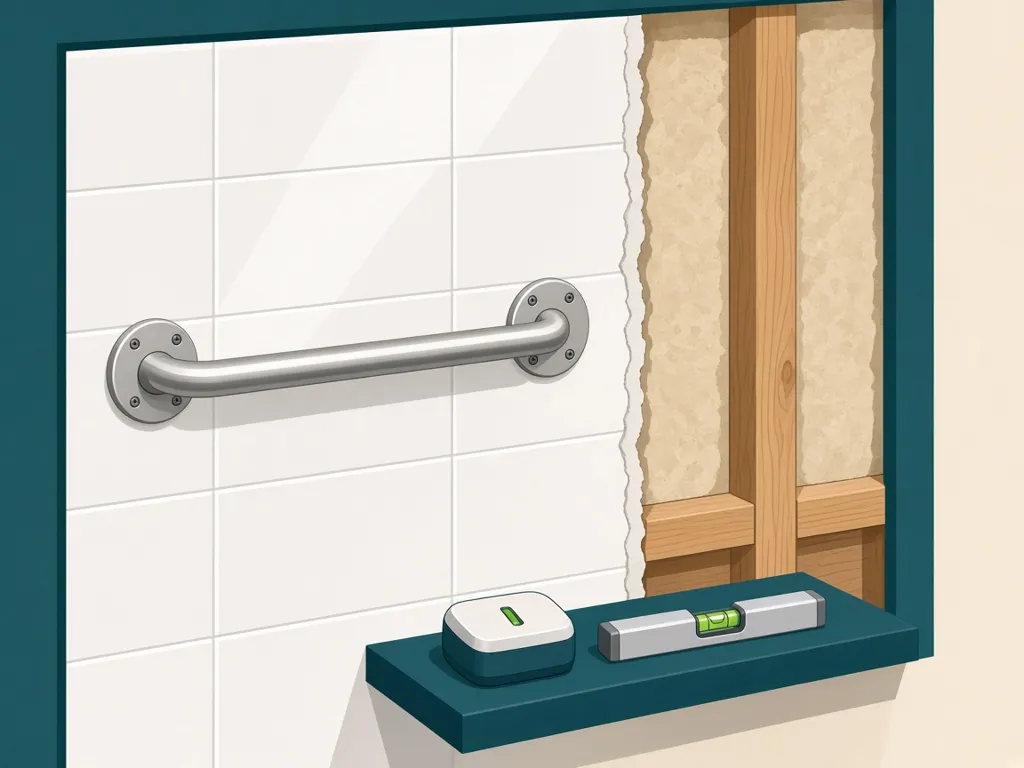
1. What is behind the wall?
Grab bars are designed to be fastened into wall framing (studs) or blocking, or with anchors the manufacturer approves for that wall. Tile, fiberglass surrounds and drywall all need different hardware. If you do not know what is behind the wall, ask a professional installer.
2. Where will a hand naturally go?
Think about where the person enters the shower or tub, where they sit and where they stand up. An occupational therapist can recommend placement for a specific person.
3. What length and shape?
Common lengths run from about 12 to 36 inches. Check whether the listing states the length overall or between the flanges, and whether the bar fits between studs at your chosen spot.
4. What does the listing state about load?
Use only the weight figure the listing or the manufacturer states, and read the conditions attached to it (usually correct installation into studs). If no figure is given, ask the seller.
5. Is it a grab bar at all?
Suction-cup handles, towel bars and soap-dish handles are not grab bars unless the manufacturer says they are designed to support a person's weight. Read the listing wording carefully.
Important. Follow the manufacturer's installation instructions, or use a professional installer. We do not give installation instructions for grab bars.
Before you buy, open the Amazon listing and check the stated dimensions, weight capacity, installation needs and what is in the box. If a detail you need is not stated, ask the seller or the manufacturer, or choose a product that states it.
For fall risk, mobility, transfers or bathing needs, ask a professional such as an occupational therapist or physical therapist to look at the person and the room. This guide is general information, not professional advice.
Picks checked against live listings
Table values come from each product's Amazon listing or the manufacturer, checked November 16, 2026. "—" means the listing does not say.
How we chose
We have not tested these products, and this is not a professional review. Each pick is matched to this page using its live Amazon listing and the maker's information, checked on the date shown on the card. See our editorial methodology.
Questions
Can a grab bar go on any wall?
Grab bars are designed to be fastened into studs or blocking, or with anchors the manufacturer approves for that wall. If you are not sure what is behind the wall, ask a professional installer.
Are suction-cup handles grab bars?
Only if the manufacturer says they are designed to support a person's weight. Read the listing wording carefully.
How should it be installed?
Follow the manufacturer's instructions exactly, or use a professional installer. We do not give installation instructions.